

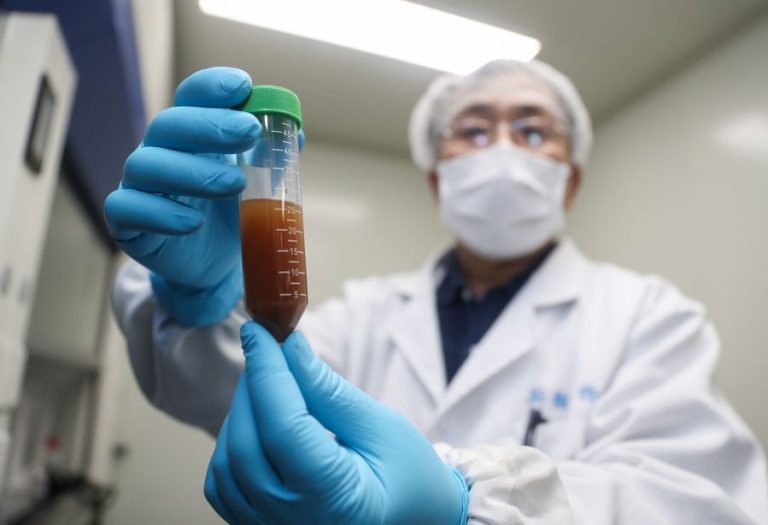
The U.S. National Institutes of Health are conducting clinical trials to investigate the effectiveness of the drug Remdesivir in treating COVID-19 and the recovery of Americans after taking this drug.
On January 19, a 35-year-old American man went to a medical clinic. He was suffering from a cough and a high fever. He had just returned from visiting his family in Wuhan, China, when he saw a warning from the US Centers for Disease Control and Prevention about the spread of the novel coronavirus (COVID-19). He decided to seek medical help and ended up at that clinic, waiting for the unknown.
The following day, this man in his thirties became the first confirmed case of the virus in the United States. The patient was isolated in the hospital under observation, and various medications were tried to alleviate his symptoms, but after five days he developed pneumonia and the fever persisted. When his condition worsened, doctors considered injecting him with an experimental antiviral drug called Remdesivir, after which his condition began to improve until he made a full recovery.
Scientists around the world are working tirelessly to identify this virus and find effective treatments. However, the U.S. Food and Drug Administration (FDA) has not yet approved any specific medication. The patient, who has recovered from most cases of COVID-19, took medications to relieve symptoms, such as pain relievers and cough suppressants.
ray of hope
In the recent past, when SARS and MERS spread , patients were treated with a combination of FDA-approved antiviral drugs, some of which had previously been used against other viruses outside of their approved use. These included drugs like lopinavir, ritonavir, and interferon beta, as well as some immunomodulators. However, the results were unsatisfactory. In a recent study published in Nature Communications, researchers compared the use of this combination with the use of remdesivir to treat MERS in cultured cells and in mice. The results showed that both prophylactic and therapeutic use of the drug improved lung function and reduced susceptibility to the virus. The drug also helped treat and prevent certain viruses , such as Ebola, in macaques .
Another study from the US National Institutes of Health (NIH) demonstrated the effectiveness of certain treatments in preventing severe acute respiratory syndrome (SARS) and Middle East respiratory syndrome (MERS) in a specific type of monkey, as well as significantly improving the response of sick monkeys. This latter type is closely related to the virus that causes COVID-19, which belongs to the coronavirus family.
Khalil, a professor of immunology and microbiology at the Faculty of Medicine at Ain Shams University, said: “Remdesivir works by inhibiting viral replication within the host cell by reducing RNA production , and it can eliminate the virus.” This is according to the study’s findings.
However, some researchers believe it is too early to judge the effectiveness of remdesivir in humans, considering the American patient’s case “exceptional,” as he was treated with it due to the worsening of his condition, a risky proposition. Hussain, a virologist working for Microbiotics, a company specializing in the production and development of antimicrobial drugs, agrees with Khalil, saying, “For the record, the drug has a good chance, as it has shown promise in laboratory-grown cells.” He emphasizes, however, that “we will have to wait until its effectiveness is proven in animals, and then in humans, through clinical trials.”
Volunteer experiences
On February 25, the National Institutes of Health (NIH) announced the start of randomized clinical trials to study the safety and efficacy of the experimental drug remdesivir in COVID-19 patients. These trials are conducted only with volunteers. The first volunteer was an American who returned home after being quarantined on the Diamond Princess cruise ship docked in Yokohama, Japan. According to Anthony S. Fauci, director of the National Institute of Allergy and Infectious Diseases’ coronavirus task force, as reported by the NIH, these trials are conducted using a double-blind system, where some randomly selected participants receive a placebo, while others receive the actual drug.
As Fauci stated, this type of trial is the gold standard for determining whether an experimental treatment benefits patients. Results are compared between the two groups after two weeks, according to a seven-point scale ranging from complete recovery to death.
All participants in the trial undergo a medical examination before its commencement to ensure their suitability. Participation is limited to individuals with confirmed HIV infection, while those experiencing mild, cold-like symptoms are excluded. It’s worth noting that several clinical trials of remdesivir are currently underway in China. Hussein explains that the potential for this drug is promising, and according to studies published so far, “its results appear encouraging.” However, it may not be the most effective treatment available, as its high efficacy has not been demonstrated in clinical trials for Ebola. All possibilities remain open, but its distinguishing feature is its mechanism of action, which allows for its broad-spectrum effect.
More than 80 therapeutic trials
Alongside remdesivir, HIV/AIDS drugs, stem cells, and some traditional Chinese treatments are vying to prove their effectiveness, according to the journal Nature. More than 80 clinical trials have been launched to find a cure for the virus. “The WHO is evaluating several Chinese trials and working to develop a clinical trial protocol, as well as collaborating with Chinese scientists to establish rigorous standards from the outset,” says Soumya Swaminathan, chief scientist at the WHO. “For example, the progression of patients’ condition must be measured in the same way, regardless of the treatment being tested.” It is worth noting that two of the drugs being used in these trials are HIV medications that work by inhibiting certain enzymes the virus needs to replicate, and they have shown success in improving the condition of laboratory animals infected with SARS and MERS.
What about vaccines?
On the other hand, vaccines help the immune system recognize certain characteristics of the virus, thus enabling it to produce antibodies to fight the virus if infected. However, it’s not that simple: viruses that infect different types of viruses—such as coronaviruses—are more complex than others and constantly change their form, making it easier for them to evade and hide from the immune system.
Basel Assaf, a specialist in comparative pathology, said: “The stages of developing any vaccine require first designing the vaccine, then testing it on laboratory animals in proof-of-concept (PoC) studies. If the results are positive, researchers move on to safety tests to ensure the vaccine is safe and free of serious side effects, before moving on to clinical trials on humans. Assaf points out that these tests take a long time, often years, but in cases of urgent need to develop a vaccine, these steps can be expedited through specific regulations governed by official drug authorities.”
In the case of COVID-19, there is an urgent need to develop a vaccine that can be produced very quickly compared to less common viruses, but a balance must be struck between the need for rapid production and safety. Ideally, an accelerated vaccine development study could be conducted in critical situations, allowing trials to take less time than usual, as is the case under the FDA’s fast-track regulations.
Assaf explains that clinical trials on humans may begin with people at high risk of contracting the disease. The first phase is conducted on a limited number of people to ensure the safety of these vaccines and the absence of serious side effects. When the trials show positive results, they are tested on a larger number of people.
Assaf adds that the US Food and Drug Administration and the European Medicines Agency are keen to prioritize safety in the trials of any drug or vaccine under development, especially if the adjuvants used in the vaccine are not commonly used in similar vaccines. These adjuvants are added to vaccines to stimulate the immune system and enhance its response.
Is this a cause for concern?
While the world races to find a treatment or vaccine for the virus that causes COVID-19, some researchers hope its spread will decrease with changing weather, as Ahmed Maher Ramadan, Professor of Public Health, Preventive and Social Medicine at Alexandria University’s Faculty of Medicine, told “For Information.” Viruses do not thrive in dry conditions and high temperatures, which is why the virus is likely to spread less in the coming months.
Despite the increasing number of people infected with the virus – as of March 18 – in 170 countries, its mortality rate is significantly lower than that of other viruses in the same family. The mortality rate for MERS was 34%, SARS 9.6%, while the mortality rate for COVID-19, as of the date of this report, is estimated at 3.4%.
Influenza B virus claims two lives annually, and the number of deaths from the novel coronavirus is significantly higher among the elderly, reaching 8% in the 70-79 age group and 14.8% among those over 80. This is attributed to the weakened immune systems of the elderly, their pre-existing conditions, and the use of immunosuppressant medications. The month of Ramadan calls for taking preventative measures to combat infection, including washing hands thoroughly with soap and water, maintaining personal hygiene, cleaning frequently touched surfaces, avoiding touching the face as much as possible, and refraining from kissing and shaking hands.
0 Comments