

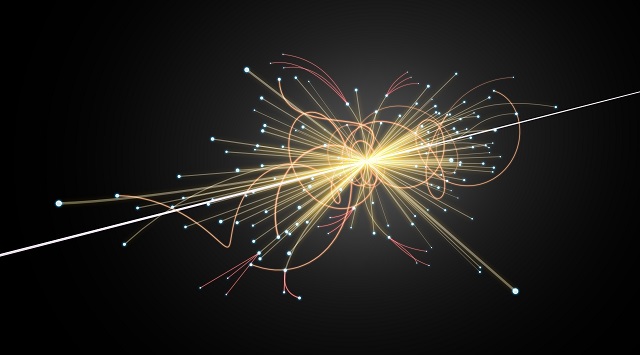
It works by accelerating electrons to collide directly with cancer cells without harming the surrounding healthy cells.
A scientific team from Stanford University has succeeded in creating a revolutionary new particle accelerator, in which the size of a single silicon chip does not exceed 30 micrometers (each meter contains one million micrometers), and its diameter is no more than the diameter of a human hair!
A particle accelerator is a device used to give a large amount of energy to atomic particles, such as protons, neutrons, and electrons, in order to study these particles, create new materials, or even use them to treat cancer with radiation.
In current particle accelerators, particles are transported and energized inside long, vacuum tubes. The accelerator at CERN, the European Organization for Nuclear Research, uses superconducting electromagnets to accelerate the particles being scanned to speeds approaching the speed of light.
Naturally, particles require long trajectories in order to gain energy and acceleration to reach that speed, which makes particle accelerators very large and bulky, difficult to use for research purposes, and increases maintenance and upkeep costs.
Over the past few decades, scientists have sought to shrink particle accelerators. They succeeded in creating an accelerator no larger than two meters in length, but the Stanford University team managed to shrink the smallest known accelerators by a factor of 66,000!
The research paper, published in the journal Science, states that scientists have designed a completely new mechanism for accelerating electrons through a vacuum channel only 30 micrometers long and no wider than a human hair, making the acceleration system integrated into a silicon chip. One such chip is found in a mobile phone.
Scientists used microwaves to accelerate electrons, instead of using the powerful magnets used by the European Organization for Nuclear Research.
In the new design, electrons flow into a vacuum channel, are diverted to silicon wires embedded within the chip, and then stimulated by pulsed laser beams from a device operating at a frequency of 100,000 times per second. Each time, the device sends a wave of photons to strike the electrons to be accelerated at a predetermined angle, which is set in advance by a computer program specifically designed for this process.
When photons collide with electrons, they gain high energy, causing them to accelerate to the speed of light, which is the primary goal of any particle accelerator.
“This accelerator is not yet ready for practical use,” said Neil Sabra, the study’s lead author, in comments published in Science. Currently, scientists can only supply electrons with a pulse of 0.915 kilovolts, a thousand times less than the required energy. Nevertheless, the research team wanted to demonstrate that, for research or medical applications, the concept of miniaturizing particle accelerators could operate with the same efficiency as conventional accelerators.
“This achievement provides a platform to raise the level of technologies to a point where applications become practical. This is the first time that visible and infrared lasers have been used to accelerate electrons in free space, and the size of the new accelerator is a milestone in taking particle acceleration technology to another level that enables researchers everywhere to conduct such experiments at a lower cost, which is incomparable to the cost of conducting experiments inside huge accelerators.”
What are the potential benefits of developing an accelerator the size of an electronic chip? Researchers say the first possible application could be in targeted cancer therapies. For example, the new accelerator could be inserted into a patient’s cells and directed straight to the tumor. Through the device, electrons would be accelerated through the accelerator to directly target cancer cells without affecting surrounding healthy cells.
By the end of this year, researchers will increase the energy level to the point required for conducting scientific experiments, which may necessitate increasing the accelerator’s length to approximately 2.4 centimeters. Neil says that success in this endeavor will represent a “game changer for particle accelerators,” democratizing experiments by allowing scientists worldwide to conduct and subsequently discuss them. “The tool will be presented in a way that makes it more accessible to researchers,” which will contribute to raising awareness and expanding its applications in cancer treatments, medical imaging, and other materials science fields.
0 Comments